Industrial Engineer - Global Program
Available in:
8 semesters
Semester Program

Format: Campus
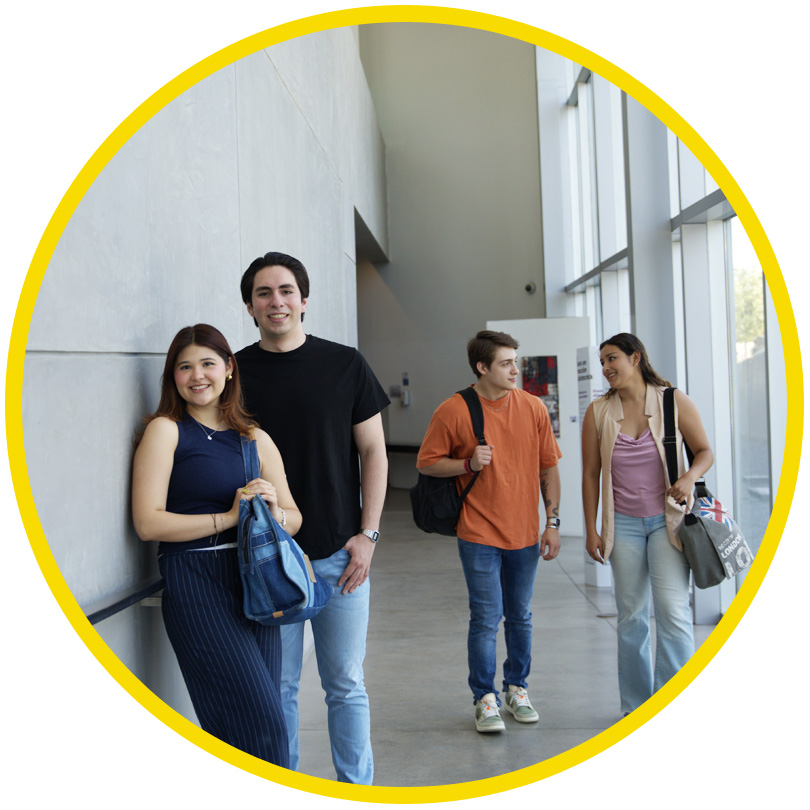
Program with classes 100% in English
- International guest lectures and high quality academics
- Professional certification (OpEx/Lean Six Sigma)
- Academic mobility programs
- Real projects with global industries
- Connection and experience with cross-border companies
- Study trips in Europe with recognition of international concentration
Prerequisites:
As a prospective undergraduate student of Industrial Engineering you should have an interest and/or abilities in:
- Working collaboratively in socio-technical environments.
- Critical and logical thinking.
- Leadership and collaborative work.
- Managing digital and information technologies.
- Analysis and synthesis.
- Mathematics and physics.

Graduate Profile:
Upon completing your undergraduate degree, you will have gained the ability to:
- Maximize efficiency in manufacturing operations.
- Manage production planning and supply chain operations.
- Develop strategies for resource optimization.
Career Prospects:
Upon graduation, you will have the necessary knowledge and skills to pursue professional roles such as:
- Process Engineer.
- Quality Manager.
- Staff Director.
- Logistics Manager.
- Manufacturing Manager.

Semester Program
 The Human Being as a project
Introduction to Engineering
Programming Methods
Differential Calculus
Chemistry for Engineers
Effective Communication
Elective on comprehensive development: block I
Engineering Design
Integral Calculus
Engineering Materials
Statics
Elective on comprehensive development: block II
Big data analytics
Dynamics
Probability
Manufacturing of Materials
Methods Engineering
Scientific Research
Statistical Inference
Electricity and Magnetism
Differential Equations
Numerical Methods
Lean Manufacturing and Quality Management Systems
Elective on comprehensive development: block III
Operations Research Models I
Industrial Electronics
Quality Engineering
Industrial Management
Elective I
Elective on comprehensive development: block IV
Operations Research Models II
Inventory Management
Computer Manufacturing
Production Systems Engineering I
Elective II
Ethics for society in the 21st century
Simulation
Engineering Economy
Specialization I: Production Systems Engineering II
Capstone Project I: Project Management
Certification I: Design of Experiments
Global Competitiveness
Innovation and New Product Development
Supply Chain Management
Specialization II: Industrial Engineering Topics
Capstone Project II
Certification II: International Quality Standards and Systems
The Human Being as a project
Introduction to Engineering
Programming Methods
Differential Calculus
Chemistry for Engineers
Effective Communication
Elective on comprehensive development: block I
Engineering Design
Integral Calculus
Engineering Materials
Statics
Elective on comprehensive development: block II
Big data analytics
Dynamics
Probability
Manufacturing of Materials
Methods Engineering
Scientific Research
Statistical Inference
Electricity and Magnetism
Differential Equations
Numerical Methods
Lean Manufacturing and Quality Management Systems
Elective on comprehensive development: block III
Operations Research Models I
Industrial Electronics
Quality Engineering
Industrial Management
Elective I
Elective on comprehensive development: block IV
Operations Research Models II
Inventory Management
Computer Manufacturing
Production Systems Engineering I
Elective II
Ethics for society in the 21st century
Simulation
Engineering Economy
Specialization I: Production Systems Engineering II
Capstone Project I: Project Management
Certification I: Design of Experiments
Global Competitiveness
Innovation and New Product Development
Supply Chain Management
Specialization II: Industrial Engineering Topics
Capstone Project II
Certification II: International Quality Standards and Systems

Descarga Mapa Curricular
Educational Objectives and Student Outcomes
Student Outcomes
Student outcomes are broad statements that describe what students are expected to know and be able to do by the time of graduation. These relate to the knowledge, skills, and behaviors that students acquire as they progress through the program.
- Apply knowledge of mathematics, natural sciences, statistics, computer science, engineering fundamentals, and an engineering specialization to develop solutions for complex industrial engineering problems.
- Identify, formulate, research literature, and analyze complex industrial engineering problems, reaching substantiated conclusions by utilizing the fundamental principles of mathematics, natural sciences, statistics, and engineering sciences, while incorporating holistic considerations for sustainable development.
- Design creative solutions for complex engineering problems and design systems, components, or processes that meet identified needs, while taking into account social responsibility, culture, environmental considerations, as well as resources and costs.
- Conduct investigations of complex engineering problems using research-based methods, including research-based knowledge, design of experiments, data analysis and interpretation, and information synthesis to provide valid conclusions substantiated by scientific literature and critical thinking; and apply creative approaches to evaluate emerging challenges within the engineering field.
- Create, select, apply, and recognize the limitations of modern engineering techniques, resources, and tools, alongside appropriate technologies, including prediction and modeling, as applied to complex industrial engineering problems.
- When solving complex industrial engineering problems, analyze and evaluate the impacts of sustainable development on society, the economy, sustainability, health and safety, legal frameworks, and the environment.
- Apply ethical principles and commit to professional ethics, responsibilities, and norms of engineering practice, while complying with relevant national and international laws. Demonstrate an understanding of the need for diversity and inclusion.
- Function effectively as an individual, and as a member or leader in diverse and inclusive teams, and in multidisciplinary, face-to-face, remote, and distributed environments.
- Communicate effectively and inclusively on complex engineering activities with the engineering community and with society at large, including writing effective reports, design documentation, and delivering effective presentations, while considering cultural, linguistic, and learning differences.
- Apply knowledge and understanding of industrial engineering management principles and economic decision-making to one’s own work, as a member or leader in a team, and to manage projects in multidisciplinary environments.
- Recognize the need for and have the preparation and ability for independent and lifelong learning, adaptability to new and emerging technologies, and critical thinking within the broader context of technological change.
Educational Objectives
Program Educational Objectives are broad statements that describe what graduates of the Industrial Engineering Program at CETYS University are expected to achieve within five years of graduation.
- Have established careers in industry (public and private), consulting, service, academia, or research, developing, applying, or advising in solutions of Industrial Engineering.
- Exercise professional leadership to prevent and resolve problems related to any of the professional or complementary core areas of the Industrial Engineering program at CETYS.
- Professional core areas: supply chain and inventory management, production process management and optimization, project management and evaluation, work design and industrial safety, Lean Manufacturing, and Quality Management Systems.
- Complementary core areas: Six Sigma, Data Science (data mining and big data), Human Resource Management, Systems Simulation, New Products Introduction, and Industry 4.0.
- Demonstrate the ability and commitment to continuous learning in sectors related to Industrial Engineering through certifications, specialized studies, graduate programs, or active participation in professional associations related to the productive sector to remain current and competitive.
- Demonstrate the skills necessary to perform successfully in multidisciplinary teams to solve problems or apply solutions in the areas of industrial engineering, specifically process and resource management and optimization, quality management, industrial safety, methods and workstations, production planning and control, supply chain and inventory management, new product introduction, and process technology trends.
- Develop and implement production systems for goods and services, using critical thinking to improve resource efficiency and process performance within organizations.
- Demonstrate the ability to innovate processes and systems to contribute to the development of organizations.
- Act ethically in engineering decision-making as responsible members of society.
The Industrial Engineering Program – Mexicali campus is accredited by the Engineering Accreditation Commission of ABET, under the commission’s General Criteria and Program Criteria for Industrial Engineering.
Why Choose CETYS?
+10
Different ways to have an international experience
+69%
of students have an international experience
+70%
of faculty members hold a Doctor’s Degree
80%
of students receive a scholarship or financial support
+10
Accrediting agencies endorse our educational quality
+10
Different ways to have an international experience
+69%
of students have an international experience
+70%
of faculty members hold a Doctor’s Degree
80%
of students receive a scholarship or financial support
+10
Accrediting agencies endorse our educational quality

Immerse yourself in other cultures both inside and outside the classroom. Whether you choose to study abroad for a short or long term, or take classes with our international faculty, we offer different options for you to explore new places, cultures, and perspectives.

Apply what you learn in real-life situations while establishing valuable connections in your field by working on joint projects together with local or international companies and professors.

Study in academic programs that continuously comply with rigorous national and international standards.

Our commitment towards student talent allows 8 out of 10 students to have some type of financial support through our many scholarships and financial aid options.
Our New Educational Model is:

Humanistic
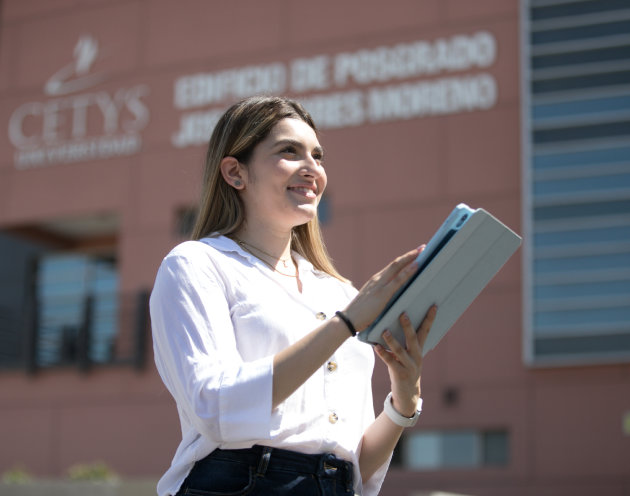
You are acknowledged as an individual and encouraged to transform your environment.

Flexible
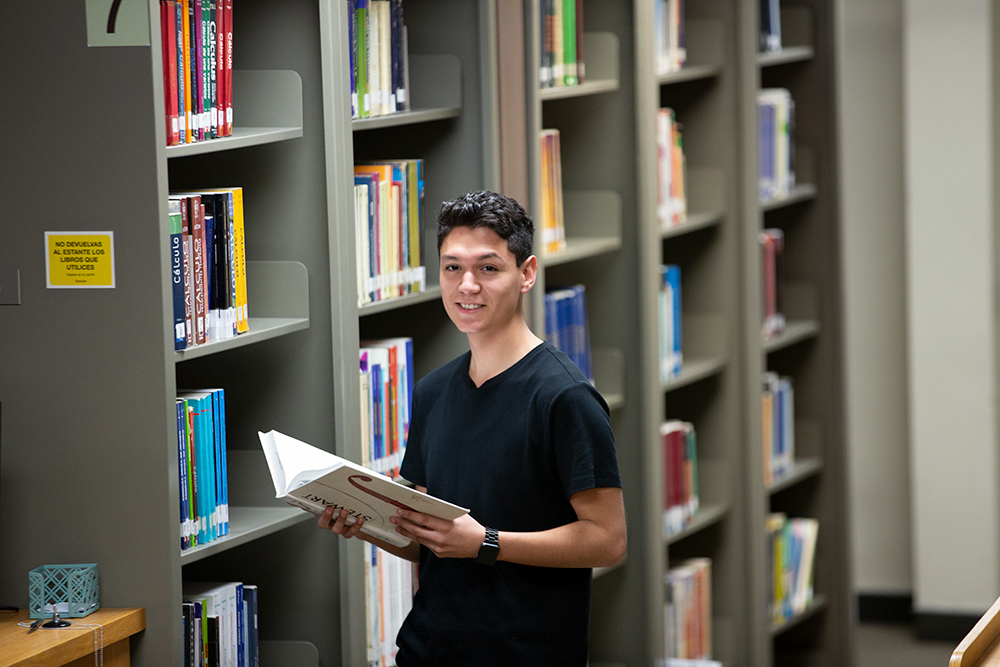
You build your own educational experience and professional profile.

Experiential
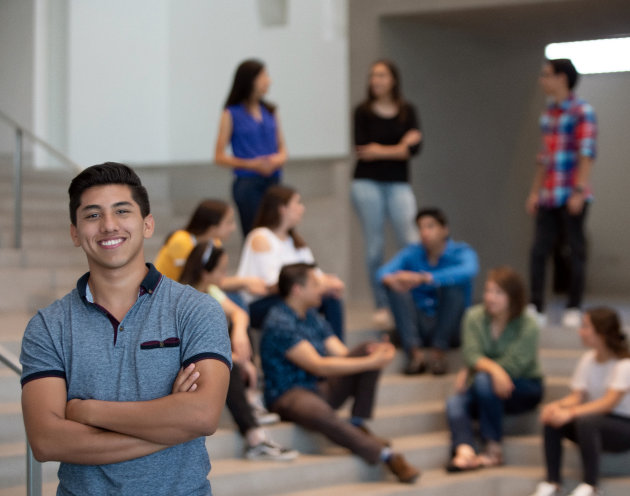
You learn, practice, and reflect on your impact on the world.
Start your Admission Process Now!
Become part of a high-quality institution that is committed to shaping successful individuals.
Our admissions advisors are here to guide you and help you begin your journey at CETYS University!
Stories